We carefully select the best approach to improve enzyme activity, leveraging decades of enzyme engineering experience.
Our engineers use a comprehensive suite of approaches supported by computational methods to develop new biocatalysts with enhanced properties. We optimize enzymes for improved activity, selectivity, stability, and tolerance to process conditions, enabling more efficient and robust biocatalytic processes.
You own the IP
No future IP tie-in. Any sequences and data are completely owned by you
Competitive Pricing
Typical costs are £40–50k per round
Expertise Driven
Leveraging digital tools, modelling and docking for site selection
Proven Track Record
Our approach
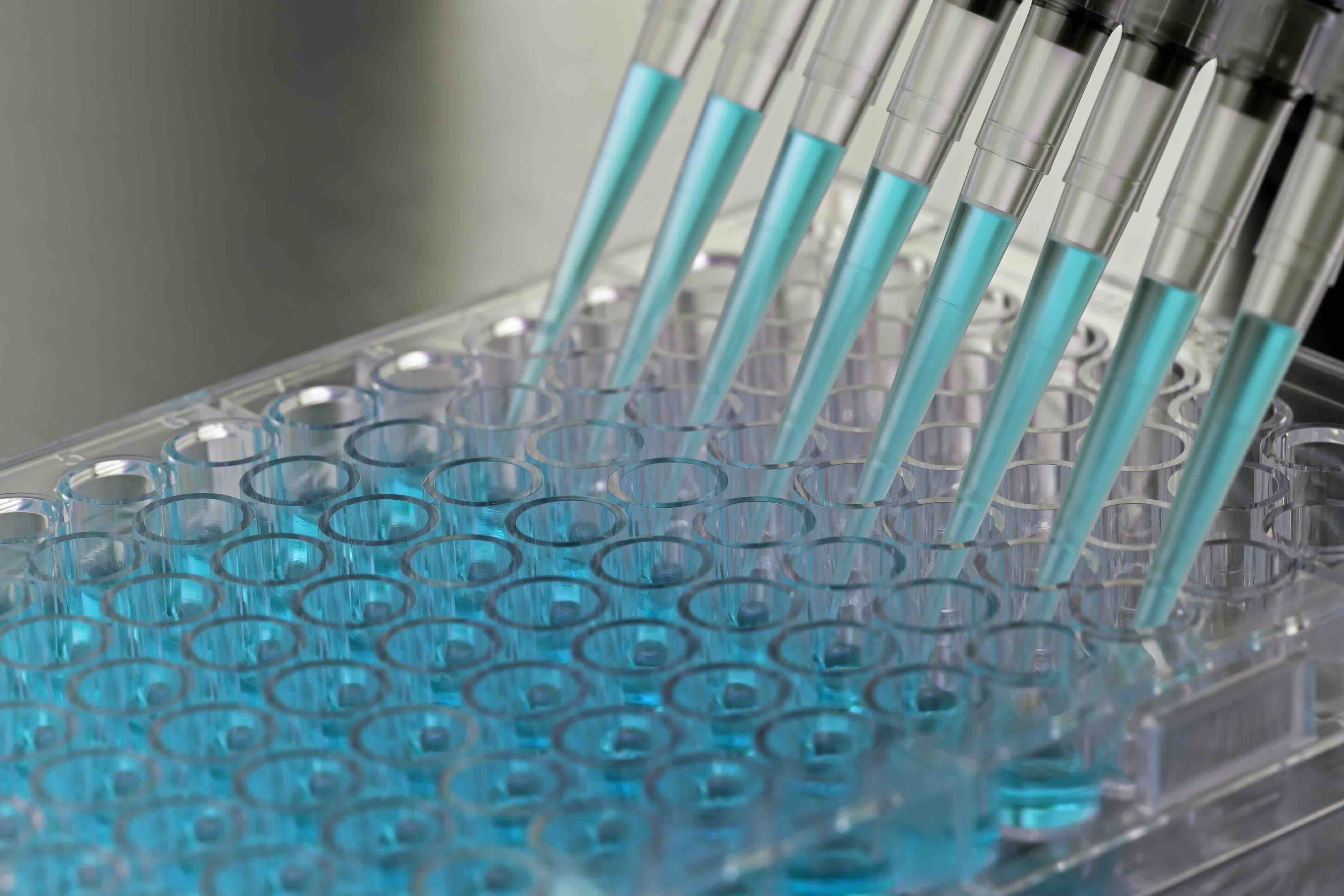
We use site-saturation mutagenesis at ~20 sites per round (~2,000 variants), pinpointed through protein structure and docking analysis. We then recombine the best mutations and iterate — systematic and thorough.
Frequently asked questions
How we work, what a project involves, and what you can expect from us.
What does a typical project look like?
Enzyme engineering projects start with a conversation about your route or target molecule and what targets you would like to achieve. From there we will determine the activity of the starting enzyme as a benchmark and develop compatible high-throughput screens. Structural analysis of the enzyme substrate complex informs which sites to target for evolution. We then use iterative cycles of mutation, screening, recombination of beneficial mutations, and redesign of the next round of mutations. We repeat this until we have achieved the agreed performance targets.
What do you need from us to begin?
The target structure, your current route if you have one, substrate material or a route to it, and your real targets or constraints for your process.
How long does enzyme engineering take?
Roughly 6–8 weeks per round of directed evolution, screening around 2,000 variants per round. How many rounds depends on where you are starting. Our lenacapavir programme took eight rounds, going from no measurable activity to 98% conversion — but that substrate was among the most sterically hindered ever attempted for a transaminase.
What happens between rounds?
We provide all screening data and our expert analysis. We agree the strategy for the next round with you before commencing.
Who owns the IP?
You do. Enzymes, variants and data generated for your project are yours.
How are projects priced?
We operate fixed cost programme for our contract research, agreed upfront. Costs are typically £40–50k per round of enzyme engineering.
Will you work with our existing partners or CMO?
Yes — we are happy to work alongside your other partners. We also have our own network of contacts so if a project needs work outside the scope of what we can achieve we would be happy to introduce you to them.
Facing a substrate no enzyme in your panel will touch? We would like to see it.
Ready to Get Started?
Contact us to discuss how this service can help you implement biocatalysis in your processes.
Contact Us